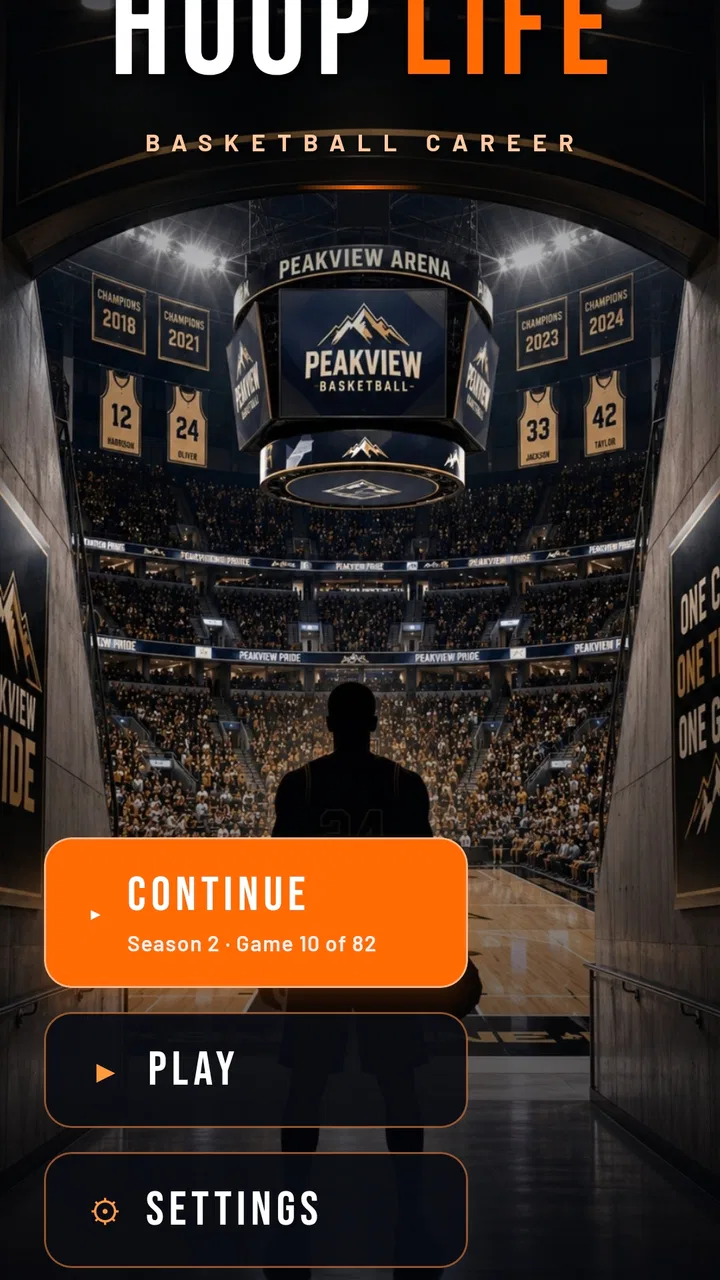
Basketball Career Sim 2026
- 4.4
- Rating
- 10.00K
- Installs
- Free
- Price

 Analysis by App-foxy
I went into Basketball Career Sim 2026 expecting a lightweight sports game, but it quickly showed a more focused identity: this is a basketball career simulator built around the long-term decisions of a player and the rhythm of managing a professional life. Rather than asking me to control every possession, it puts the emphasis on the broader journey of becoming a baller, improving over time, and making choices that shape a career.
That distinction matters. If you want a detailed on-court game with direct shooting, passing, and defensive controls, this will not replace a traditional basketball title. If you prefer planning, progression, and the feeling of guiding one athlete through a career, its compact approach is much more appealing. My overall impression is that Basketball Career Sim 2026 works best as a thoughtful, pick-up-and-play sports management game, especially when I want basketball flavor without committing to a long match.
What the career-focused format gets right
The strongest part of the experience is its clear fantasy. I am not simply selecting a team and watching numbers move; I am following the idea of a player trying to build a life around basketball. That gives ordinary decisions more weight than they would have in a basic score simulator. A good session feels less like playing one isolated game and more like checking in on a developing career.
You May Also Like

 Blood Strike: 2.5 Anniversary
Blood Strike’s Loadouts Turn Every Drop Into a Tactical Gamble
A close look at Blood Strike’s custom loadouts: how fast access to signature weapons reshapes its battle royale rhythm, rewards preparation, and narrows the gap between fights.

 Pandora - Music & Podcasts
Pandora’s Music Is Easy to Start, but Harder to Recover
Pandora’s strength is its low-effort path from a seed to a station. Its weak spot is how much confidence it asks you to place in connection, setup, and quiet recovery.

 8 Ball Pool
 Is Built on Rivalries, Rematches, and Routine
A close look at the rivalries, rematches, shared routines, and unanswered safety questions that turn a quick pool match into a persistent mobile community.

 Samsung Music
’s Quiet Strength Is Playing What You Already Own
Its reach comes less from spectacle than from dependable access to a personal library. That simplicity is both the app’s strongest retention engine and its ceiling.

 AccuWeather: Weather Radar
AccuWeather Review: A Quick, Clear Forecast for Everyday Decisions
For everyday plans, the best forecast is the one you can understand quickly. AccuWeather makes rain timing, radar, and local conditions easy to act on, with a few trade-offs.

 Hill Climb Racing
Why Hill Climb Racing Still Turns Crashes Into One More Run
A tiny car, a bumpy hill and one more upgrade: Hill Climb Racing keeps resurfacing because its simple chaos makes every near-miss feel personal.
More From Our News Desk



The offline design is particularly useful. I can play without treating the game as a constant online service, which makes it a natural companion for short breaks, travel, or places where connectivity is unreliable. I found that this also changes how I approach it: instead of waiting for an event or worrying about a live schedule, I can open it, make a few decisions, and close it when I am done.
That makes the game easy to fit into a normal day. Imagine having fifteen minutes before an appointment. A conventional basketball game may feel too involved, while a career simulation can give me a satisfying moment of progress without requiring a full match. Later, I can return and continue thinking about the next step rather than remembering complicated controls or a long unfinished contest.
The presentation also benefits from restraint. Basketball Career Sim 2026 does not need to pretend to be a console-style simulation to be enjoyable. Its appeal comes from the career layer, where the player’s development and direction matter more than spectacular visual moments. For me, that focus is more convincing than a game that tries to offer every basketball mode at once.
Progress feels more interesting when I plan instead of rushing
One useful way to approach the game is to avoid treating every available improvement as equally urgent. When I play a career simulator, I get more enjoyment from choosing a direction and accepting that some areas will develop later. That creates a small but meaningful trade-off: a player built for immediate usefulness may not have the same long-term identity as one developed more patiently.
This is where the title can appeal to people who enjoy sports strategy but do not necessarily want a complicated management spreadsheet. The decisions remain connected to a recognizable basketball story. I can think about what kind of player I want to become, how much patience I have for gradual progress, and whether a short-term boost is worth changing my broader plan.
My practical tip is to decide on a role before spending resources or making progression choices. Even without overanalyzing every screen, having a simple idea—such as prioritizing a dependable all-rounder or leaning into a more specialized style—helps prevent random decisions. The game becomes more coherent when I treat development as a plan rather than a sequence of disconnected taps.
That approach also makes repeat sessions more engaging. A quick visit is not only about collecting the next reward or advancing a meter. It becomes an opportunity to check whether the career is moving in the direction I intended. For a sports game, that sense of ownership is more valuable to me than constant action.
Why offline play changes the everyday experience
Offline access is not merely a technical convenience here; it supports the game’s entire pace. I can use it during a commute, while waiting in a queue, or at home when I want something calmer than a competitive online match. There is no need to organize a session around other players, and I do not have to be in the mood for a full arcade-style contest.
It also makes the game less demanding mentally. Online sports games often encourage quick reactions, repeated matches, and attention to rankings or opponents. This one is better suited to a slower routine. I can make a few career decisions, reflect on what I want to do next, and leave. That stop-and-start structure is one of its most practical strengths.
There is a trade-off, though. Offline play means the experience is primarily about my own progression rather than a changing human competition. Players who need live opponents, social leagues, or constant unpredictability may find the career loop too self-contained. I appreciate the independence, but I would not recommend it as a replacement for a multiplayer basketball community.
The game’s age rating of Everyone also makes its broad presentation easy to understand. I would still choose it based on the player’s interest in simulation rather than age alone. A younger basketball fan may enjoy the career idea, while an adult who wants deep roster management may find the lighter format more suitable for casual play than serious franchise planning.
The main limitation: the career loop may feel narrow
My biggest reservation is connected to the same focus that makes the game approachable. Because the experience centers on a basketball career, players looking for a wide collection of modes may eventually feel that the structure is limited. The game is not trying to be a full replacement for every kind of basketball title, and that means its appeal depends heavily on whether the career fantasy is enough to keep you interested.
I noticed that the experience is most enjoyable when I set my own small goals. For example, I might play with the aim of improving a particular aspect of my player or reaching a new stage in the career. Without that personal target, the routine can feel more mechanical. This is not a deal-breaker, but it does mean the game asks me to bring some of the motivation myself.
Another point to consider is the presence of in-app purchases, which range from $0.99 to $79.99 per item. The free entry point is welcome, but I would advise treating optional purchases carefully. In a progression-focused game, spending can make it tempting to solve a short-term frustration immediately instead of letting the career develop naturally. I prefer to play first, understand the rhythm, and decide later whether any purchase genuinely improves my experience.
That price range also makes the game a weaker fit for anyone who wants a completely frictionless, one-time purchase experience. A free download can be convenient, but players who are sensitive to optional spending should establish a personal rule before beginning. I find that deciding not to buy impulsively keeps the career choices more satisfying, because progress still feels connected to my decisions.
How it compares with other basketball choices
Compared with an arcade basketball game, this title is less about reflexes and more about direction. An arcade alternative is the better choice when I want immediate action, dramatic plays, and a clear feeling of controlling the ball. Basketball Career Sim 2026 is better when I want to think about the player behind those moments and follow a larger personal journey.
Compared with a traditional team-management game, it is more personal and less focused on running an entire organization. I am drawn into the identity of a baller rather than being asked to think primarily like a general manager. That makes the game easier to approach during short sessions, although it may not satisfy players who want detailed tactics, trades, lineups, or a large club-building sandbox.
It also differs from a live multiplayer sports game in an important way: the pressure is lower. I do not need to match someone else’s schedule or maintain a competitive routine. That is a strength for casual players and a weakness for anyone who measures enjoyment through head-to-head competition. The right choice depends on whether basketball is, for you, an action challenge, a management puzzle, or a personal career story.
One of my more useful habits is switching expectations before opening it. I do not ask it to deliver the same satisfaction as a controller-based basketball game. Instead, I use it when I want a quieter form of sports entertainment. That simple adjustment makes the game feel more purposeful and prevents the most common disappointment: expecting direct match control from a career simulator.
Who should give it a try
I would recommend Basketball Career Sim 2026 to someone who likes the idea of building a basketball identity but prefers planning to fast reactions. It is especially suitable for players who enjoy short offline sessions, gradual progress, and decisions that create a sense of personal direction. The free price makes it easy to test without committing to a purchase at the start.
It is also a good match for fans who enjoy sports games in small doses. If you often play on a phone while waiting for something, the career format is more practical than a full match. You can make progress without needing a long uninterrupted block of time, and the offline structure suits situations where a connection cannot be assumed.
I would be more cautious recommending it to someone who wants realistic match simulation, extensive team control, or a competitive online ladder. Those players may be happier with a game designed around direct basketball action or a deeper franchise model. This title’s satisfaction comes from the career path, so the player needs to care about that layer rather than viewing it as an accessory.
The game is developed by Vule Games and currently carries a 4.4 average from over two hundred ratings, with more than ten thousand installs. Those figures suggest a positive early reception and a modest but real player base, though I would still judge it by the kind of basketball experience I want rather than by popularity alone. The current version is 1.0.4, and it supports Android 7.0 or later, which keeps it accessible to many older devices.
Small habits that make the game more rewarding
First, I recommend playing in deliberate check-ins instead of repeatedly reopening the game without a goal. A short session feels more meaningful when I know what I am evaluating: development, career direction, or the next sensible decision. This prevents the routine from becoming a blur of identical actions.
Second, I would avoid spending simply because progress feels slow. The in-app purchase structure makes patience worthwhile. I get more information about the game by allowing the career to develop naturally, and I can decide later whether optional spending fits my preferences. This is especially important for anyone who enjoys the satisfaction of earning progress rather than accelerating it.
Third, I would compare the game with my actual free time, not with the most ambitious basketball title I have played. If I have only a few minutes, the offline career format may provide more value than a technically richer game that I rarely have time to start. If I have a long evening and want intense competition, the opposite is true.
Finally, I would use the career concept as a reason to accept imperfect outcomes. A player’s path is more interesting when every decision does not produce the ideal result. If I constantly restart mentally or chase the fastest possible improvement, I lose some of the story that makes the simulation appealing. Letting the career take an unexpected turn gives the game more personality.
My verdict after spending time with it
Basketball Career Sim 2026 has a clear thesis and mostly stays loyal to it: basketball can be engaging even when the main challenge is guiding a career rather than controlling every play. I like its offline convenience, approachable structure, and emphasis on building a player’s path. It is a comfortable game to return to when I want a sports experience that fits around the rest of my day.
Its limitations are equally clear. The career loop may not provide enough variety for players seeking a huge basketball sandbox, and the optional purchase range means cautious players should set boundaries before they begin. It also cannot replace direct-control action or live competition. Those are not minor details; they define who will enjoy the game and who will quickly move on.
For me, the recommendation is straightforward: try it if you want a free, offline basketball career simulator with a personal, slower-paced focus. Skip it if your ideal basketball game is built around real-time matches, deep franchise administration, or online rivals. With the right expectations, I found it an enjoyable way to turn spare minutes into a developing sports story, and Basketball Career Sim 2026 earns its place as a focused casual option rather than an all-purpose basketball replacement.
FAQs for Basketball Career Sim 2026
01What is Basketball Career Sim 2026?
Basketball Career Sim 2026 is a basketball management and career simulation game focused on building a player’s journey from an aspiring athlete to a professional star. You typically make career decisions, improve abilities, manage training, compete in games, and work toward better contracts and achievements. It is designed for players who enjoy strategy, progression, and sports-management elements rather than only controlling live matches.
02Can I play Basketball Career Sim 2026 offline?
The game may support offline career progression, but some features can depend on an internet connection. Basic simulation, training, and single-player activities are generally the parts most likely to work without constant access. Online events, advertisements, cloud saving, account synchronization, updates, or leaderboard features may require connectivity. Before downloading, check the store listing and test the game offline to confirm which functions remain available.
03Is Basketball Career Sim 2026 free to download?
Basketball Career Sim 2026 may be available as a free download, although free access does not always mean that every feature is completely unrestricted. Depending on the version, players could encounter optional in-app purchases, advertising, premium currency, or waiting periods connected to progression. It is worth reviewing the purchase information on the Google Play Store or App Store, especially if children may use the device.
04What can I do in Basketball Career Sim 2026?
The main appeal is developing a basketball career through repeated decisions and simulated performance. Players can usually train specific skills, improve attributes, choose how to spend time and resources, participate in competitions, and pursue stronger teams or contracts. The experience is more about long-term planning than arcade controls, so your results depend on balancing development, fitness, performance, finances, and career opportunities.
05Is Basketball Career Sim 2026 suitable for casual players?
It can be suitable for casual players who enjoy basketball, statistics, and gradual progression, because sessions can often be completed through short decisions or simulated activities. However, the game may feel slower than an action-focused basketball title, particularly if you prefer direct controls and constant match gameplay. New players should expect to learn its menus, understand its progression systems, and make careful choices to avoid wasting limited resources.
Pros
- Detailed career progression keeps each season feeling meaningful.
- Player development choices add strategy beyond simply playing games.
- League statistics make it easy to track long-term performance.
- Quick simulation options suit players with limited time.
- Simple interface makes menus easy to navigate on mobile devices.
Cons
- Some features may take time to understand without an in-game tutorial.
- Long-term saves could feel repetitive once career goals become familiar.
- Simulation results may occasionally feel unpredictable or harsh.
- Advanced customization may be limited compared with full PC management games.
- Frequent play can drain battery during extended simulated seasons.

Basketball Career Sim 2026
Gallery